
Reflection: Animal Handling Skills
- Nov 7, 2017
- 2 min read
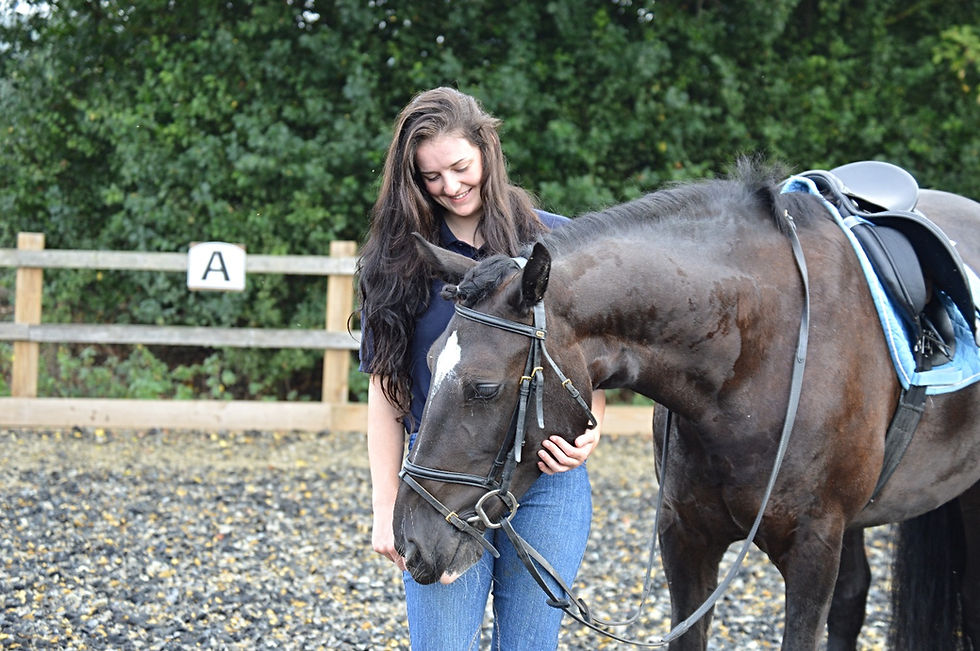
One element of my first weekend at Writtle University College was to be demonstrated how to handle both Equine and Canines correctly. This was to prepare us for our upcoming Observed Structured Practical Examination (OSPE) in November. The idea to make the process of handling these animals as stress-free and comfortable as possible as well as the handler being safe (Chapman et al., 2007). Correctly handling these animals at different paces while not interfering with their way of going is important when working as a physiotherapist because it can help lead to the correct diagnosis (Veenman, 2006).
In the exam we will be given a set of instructions that when first looked at sound very simple. However, there is much more to it than just removing the dog from the cage or the horse from the stable. For example checking the bridle is the correct fit for the horse you’re working with, sounds simple but when working with horses I know, this is not something I would naturally do. This is definitely something I will have to get used to. I have worked with and am confident around these animals but the pressure of doing everything to a specification made it feel like I had forgotten everything I knew about handling these animals, Baumeister suggests that ‘under-performing’ is normal when something is of importance. I am sure with a bit more practice and without the first day nerves it will all become second nature.
Over the weeks before the exam I will practice handling both dogs and horses unknown to me, to build my confidence in this area. So when it comes to the exam, although I’m sure I will be nervous, these nerves will not be added to by the worry of not meeting the OSPE specification as I will be learning the specification while practicing on unknown animals and so preparing myself for the exam (Neuderth et al., 2009).
References
Baumeister, R.F., 1984. Choking under pressure: Self-consciousness and paradoxical effects of incentives on skillful performance. Journal of Personality and Social Psychology, 46(3), pp.610–620. Available at: http://doi.apa.org/getdoi.cfm?doi=10.1037/0022-3514.46.3.610 [Accessed October 9, 2017].
Chapman, H., Taylor, R., Buddle, R., Murphy D., 2007. Student training in large-animal handling at the School of Veterinary and Biomedical Sciences, Murdoch University, Australia. Journal of Veterinary Medical Education, 34(5), pp.576–582. Available at: http://jvme.utpjournals.press/doi/10.3138/jvme.34.5.576 [Accessed October 9, 2017].
Neuderth, S., Jabs, B. & Schmidtke, A., 2009. Strategies for reducing test anxiety and optimizing exam preparation in German university students: a prevention-oriented pilot project of the University of Würzburg. Journal of Neural Transmission, 116(6), pp.785–790. Available at: http://link.springer.com/10.1007/s00702-008-0123-7 [Accessed October 11, 2017].
Veenman, P., 2006. Animal physiotherapy. Journal of Bodywork and Movement Therapies, 10(4), pp.317–327. Available at: http://www.sciencedirect.com/science/article/pii/S1360859206000362 [Accessed October 9, 2017].
Comments