
The Masseter
- Oct 18, 2017
- 2 min read

The Masseter (Equine)
The masseter originates at the facial crest of the maxilla and the zygomatic arch (Budras 2011). It inserts into the lateral external surface of the upper broad portion of the inferior maxilla or mandible (lower jaw) (Budras 2011). The actions of the masseter are too unilaterally and bilaterally contract to bring the teeth of the lower jaw to the upper (Budras 2011). It also protrudes the jaw. This muscle is innervated by the mandibular branch of the trigeminal nerves (Budras 2011).
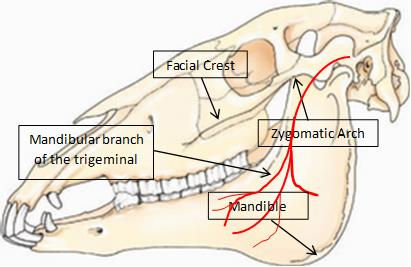
Tightness of the masseter can inhibit the function of the temporomandibular joint (TMJ) and cause difficulty opening the mouth and eating (Pearson et al. 2005). This can lead to weight loss and autotrophy of the muscle (Pearson et al. 2005). If the horse has problems chewing due to teeth issues it can cause hypertrophy of the masseter on the opposite side and create further tension (Schefer et al. 2011). If there is pain within the muscle the horse may become head shy, become heavy in the hand or begin to head shake (Schefer et al. 2011). Horses that crib, grind their teeth or are ridden by a rider who continuously pulls on the reins can often show signs of tightness and pain in the masseter (Schefer et al. 2011).
[endif]--![endif]--

References
Budras, K.-D., 2011. Anatomy of the horse, Schlütersche.
Pearson, E.G., Snyder, S.P. & Saulez, M.N., 2005. Masseter myodegeneration as a cause of trismus or dysphagia in adult horses. The Veterinary record, 156(20), pp.642–6. Available at: http://www.ncbi.nlm.nih.gov/pubmed/15894730 [Accessed October 18, 2017].
Schefer, K.D. et al., 2011. Laboratory, Electrocardiographic, and Echocardiographic Detection of Myocardial Damage and Dysfunction in an Arabian Mare with Nutritional Masseter Myodegeneration. Journal of Veterinary Internal Medicine, 25(5), pp.1171–1180. Available at: http://doi.wiley.com/10.1111/j.1939-1676.2011.00787.x [Accessed October 18, 2017].
Comments